Resilience and restoration
Ecological resilience is the ability to withstand changing drivers and disturbances without making a major shift to a new alternative state. Despite this simple definition, applying resilience and related concepts has proven quite difficult.
Understanding tipping points
Applying resilience concepts to real ecosystems requires deciding what would count as evidence for a tipping point, how long a transition could take, and what allows recovery. Work across grasslands, forests, and other systems combines models with time series and spatial surveys. Seeds, buds, and other sources of regeneration can help explain why similar disturbances produce different outcomes.
Representative papers
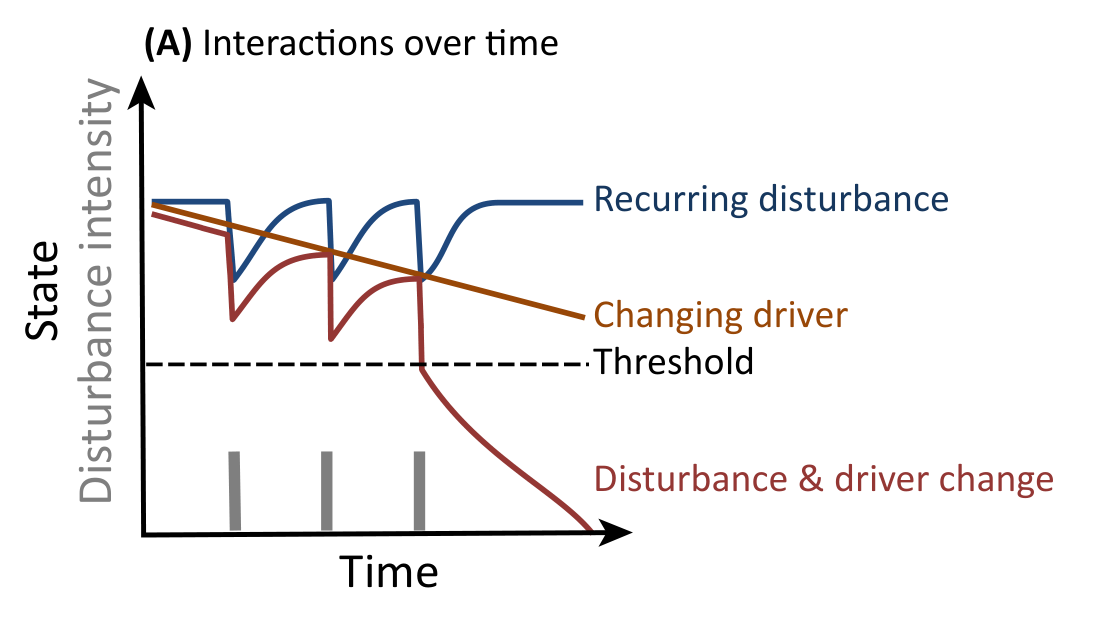
- Tipping points and abrupt change: Ratajczak et al. (2018) and Turner et al. (2020).
- Seed banks: Ma et al. (2021).
- Forest regeneration: Ramiadantsoa et al. (2023).
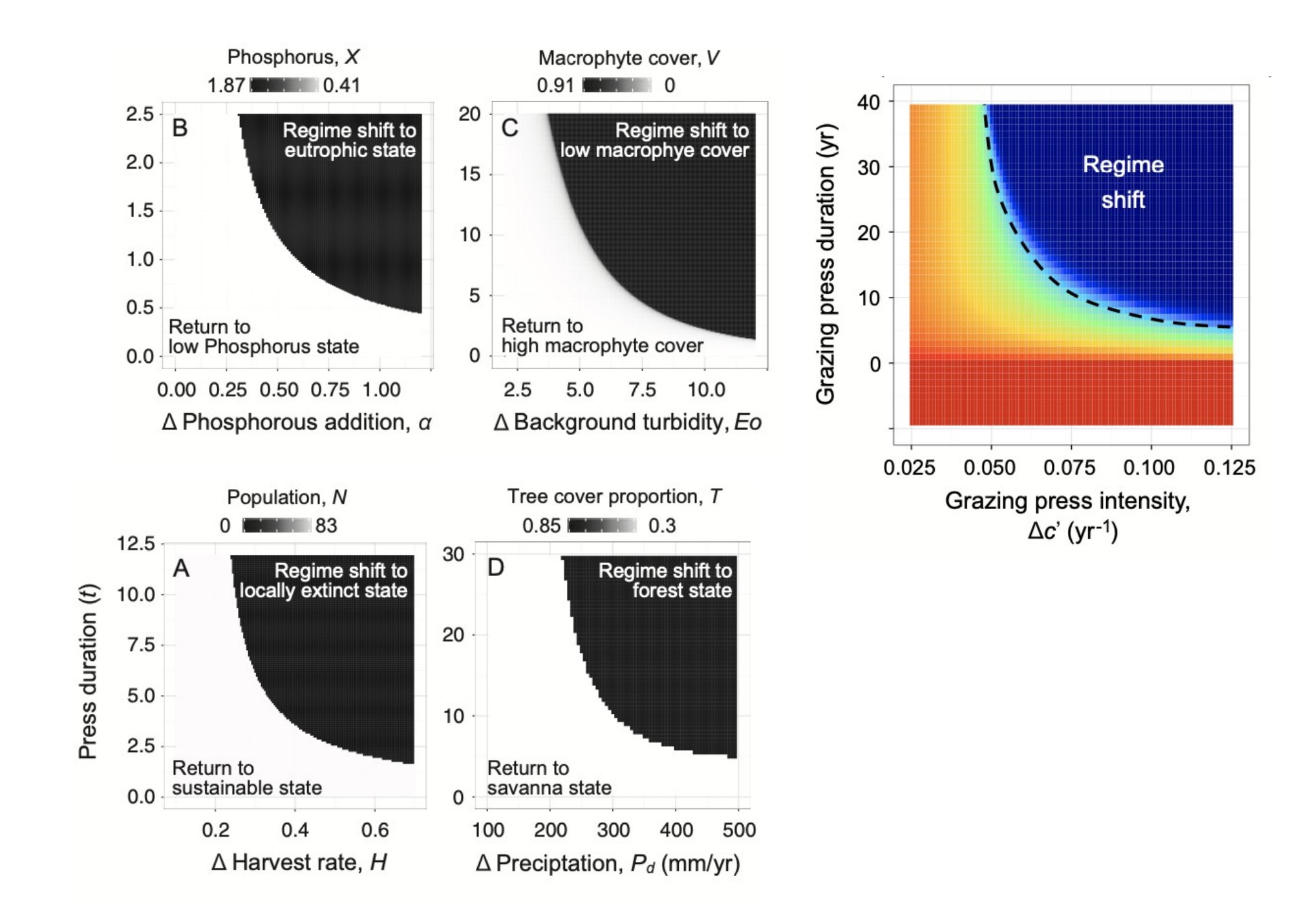
- Press/pulse duration and transient dynamics: Ratajczak et al. (2017), Ecological Monographs. Forest resilience models: Albrich et al. (2020).
- Evidence from spatial and temporal records: Ratajczak et al. (2017), Journal of Ecology, Stegner et al. (2019), and Chen et al. (2026).
Images from this research
Changes every 10 seconds