Bison ecology
Bison reintroduction offers a way to understand how large native herbivores shape grasslands and whether their return can help conserve biodiversity. Long-term experiments at Konza let us follow changes in plant communities, vegetation structure, and responses to drought over decades. Comparisons with cattle-grazed and ungrazed grasslands help identify which effects depend on the grazer and which depend on the setting.
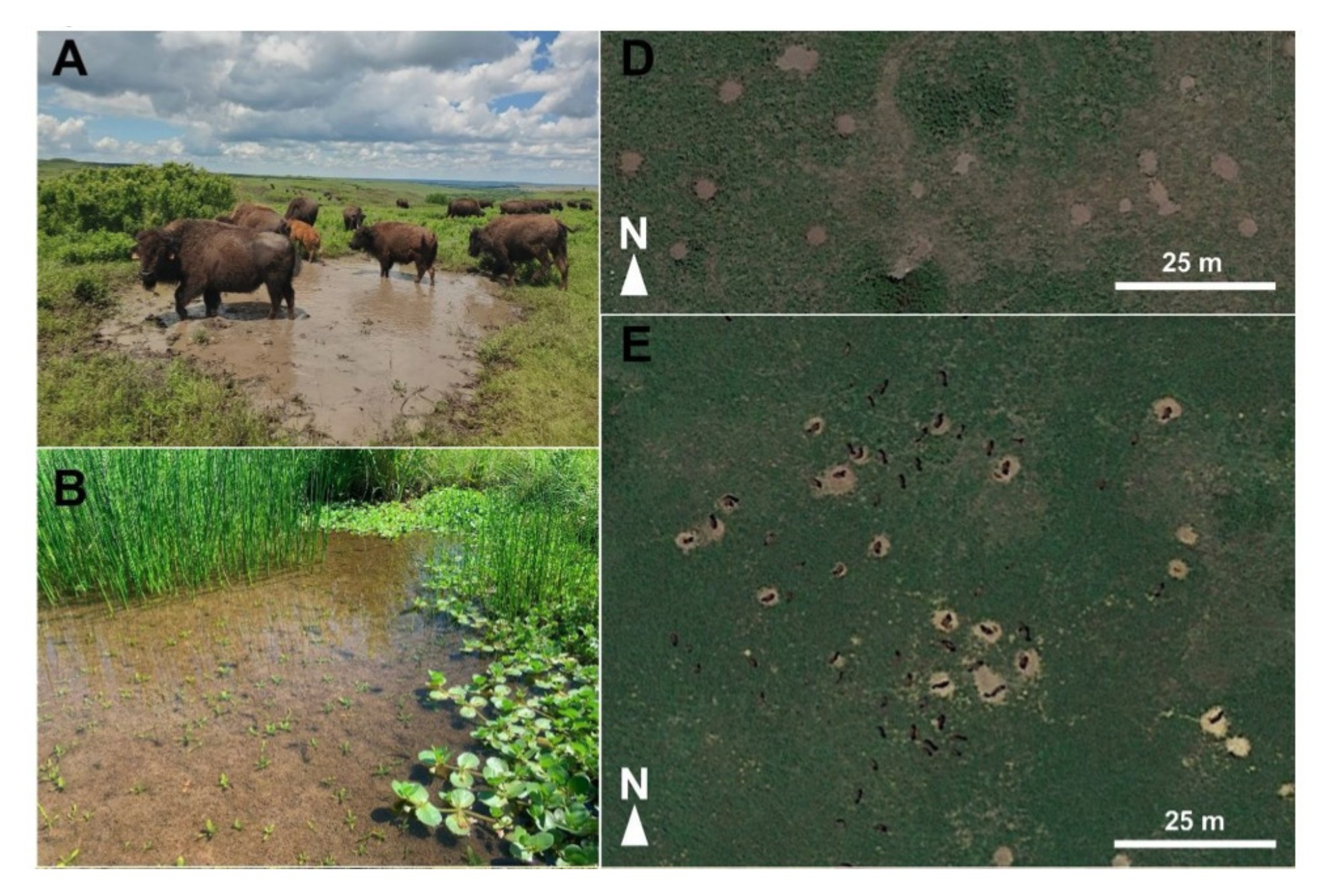
These effects extend beyond the plants bison eat. Grazing changes the fuels available for fire, while trampling and wallowing create patches with different soils, vegetation, and water conditions. Projects across the lab connect these changes to woody plant establishment, pollinator habitat, and the microbial communities found in wallows. A recurring question is when reintroducing bison supports biodiversity and resilience, and where additional management is needed.
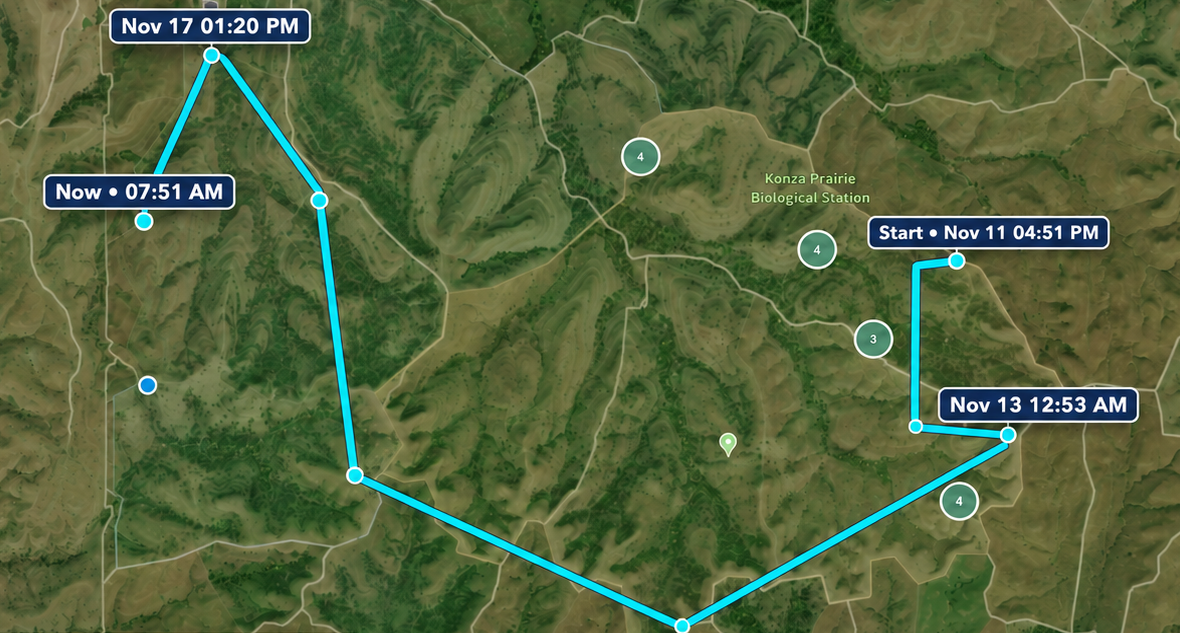
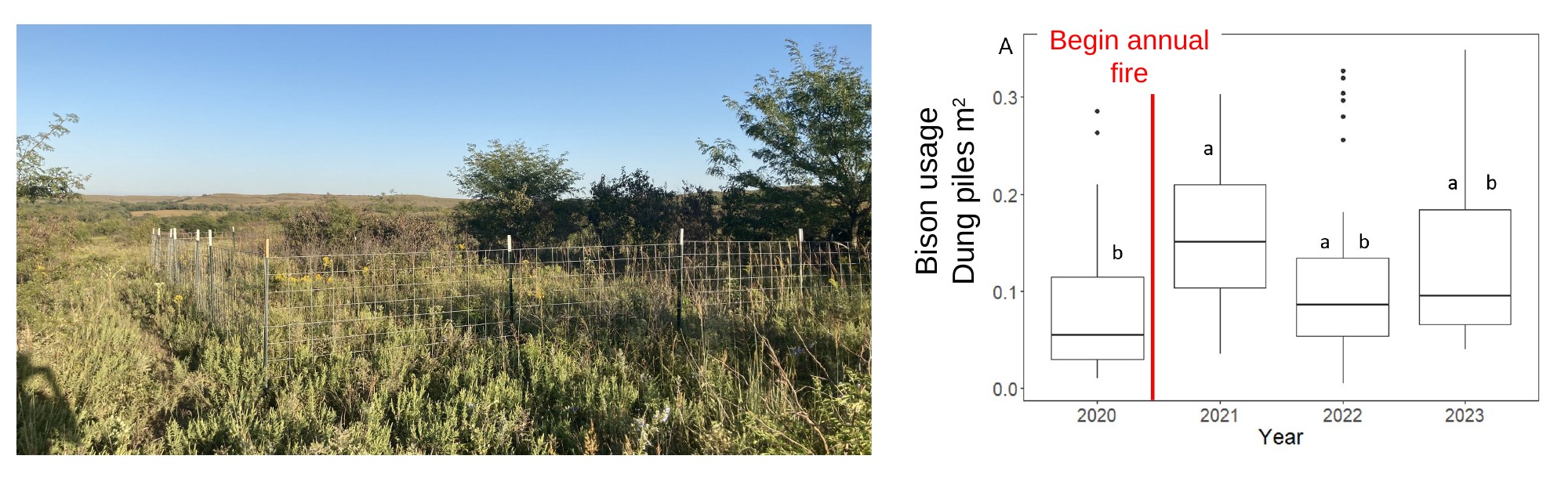
We are also asking more questions about the bison themselves: where they spend time after a fire, which patches they return to graze, and whether restoring open vegetation brings them back to areas that have provided poor forage for decades. This connects the ecological effects of bison with the habitat conditions that sustain them.
Grazing lawns are one example. By repeatedly grazing the same patch, bison can keep grasses short and gain access to high-quality regrowth. Wallows are another: the depressions bison create can collect drinking water after rain and, in some soils, access to salts. We are interested in when these changes influence where bison go next.
Representative papers
- Bison, plant diversity, and drought resilience: Ratajczak et al. (2022).
- Bison and woody vegetation: Noble, Ratajczak & Noble (2025); habitat use after restoring frequent fire: Noble & Ratajczak (2025).
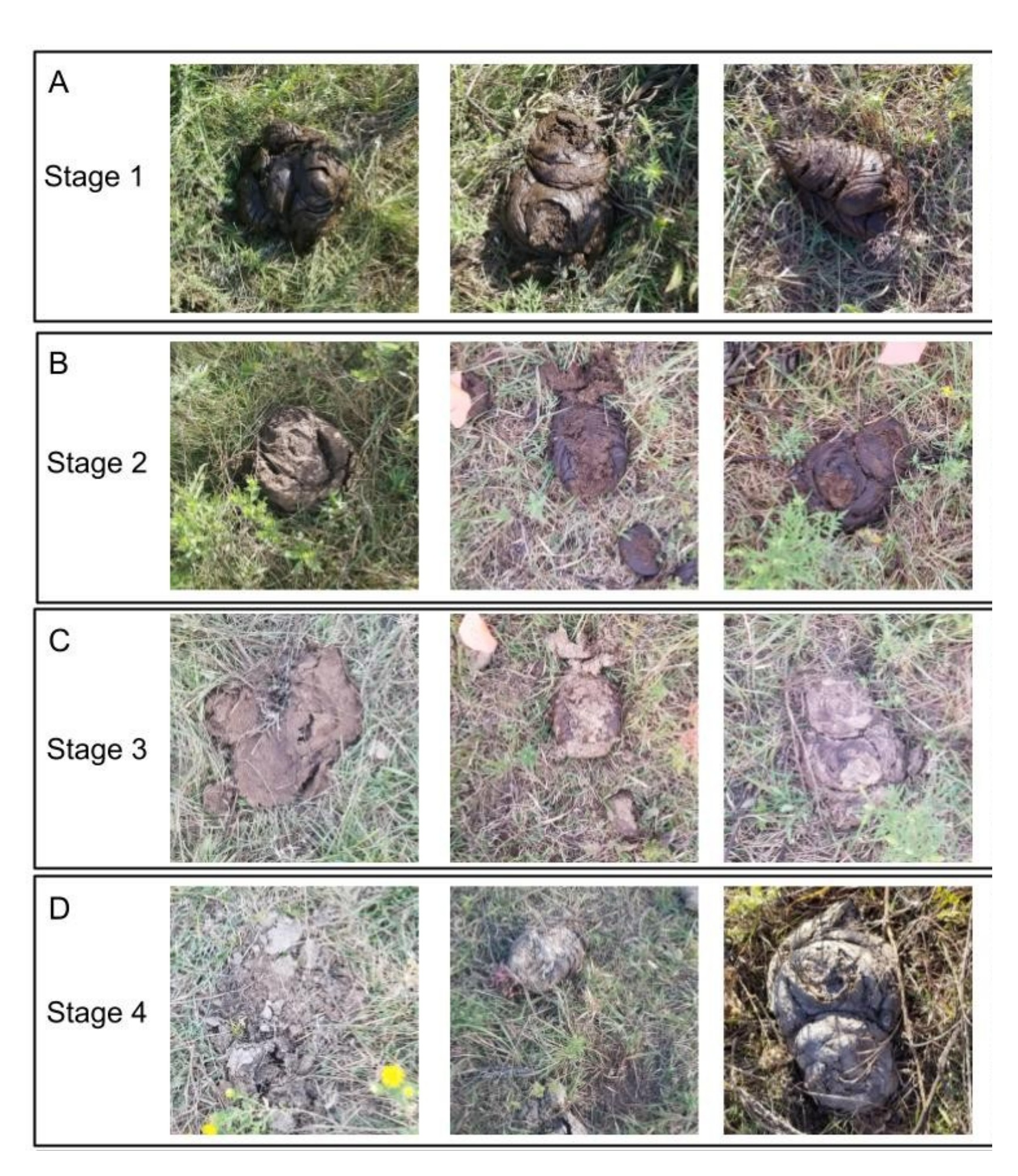
- Dung as a record of habitat use: B. Noble & Ratajczak (2023). Wallow research: Bookout’s dissertation.
- Drought resilience in grazed and ungrazed grasslands: Bookout et al. (2025).
- Bison and cattle in mixed-grass prairie at Badlands and Theodore Roosevelt National Parks: Noble & Ratajczak (2026).
Images from this research